
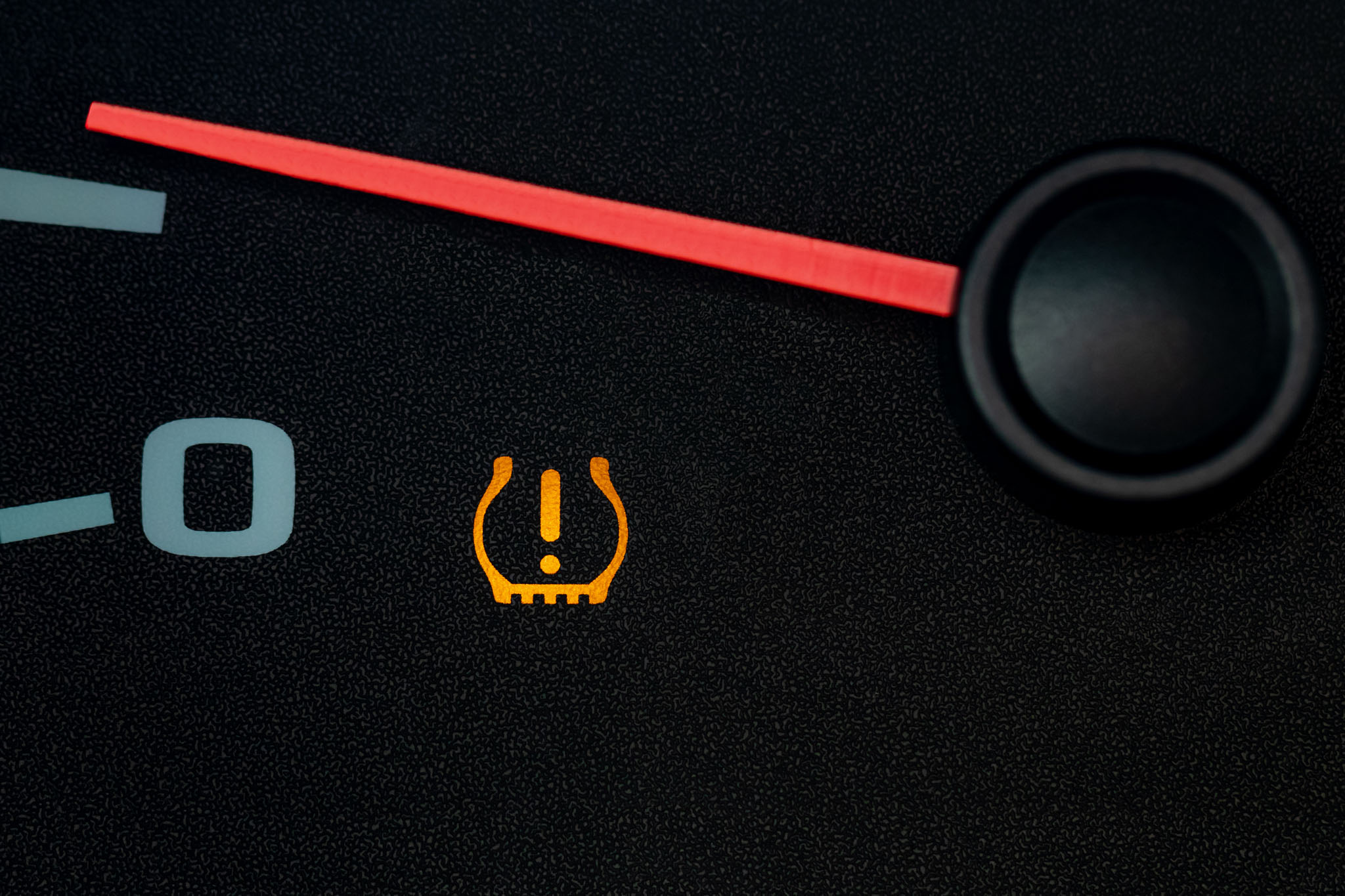
Your vehicle’s TPMS (Tire Pressure Monitoring System) is designed to alert you when your tires are underinflated or overinflated. This system helps prevent tire damage, improve fuel efficiency, and keep you safe on the road. On your dashboard, the TPMS light looks like a horseshoe with an exclamation point in the center—when it comes on, it’s telling you to check your tire pressure.
Understanding the TPMS Warning Light
How the TPMS light behaves can indicate the type of issue:
- Solid Light: Usually means one or more tires are underinflated. Pull over safely and check the tire pressure manually with a gauge.
- Blinking Light: Indicates a malfunction in the TPMS itself, which requires professional inspection.
- Intermittent Light: If the light comes on and then turns off, temperature changes or normal pressure fluctuations may be triggering it.
Whether your tires are overinflated or underinflated, incorrect pressure can reduce traction, wear tires unevenly, and decrease fuel efficiency.
How to Check Your Tire Pressure
Tire pressure is measured in PSI (pounds per square inch). To find the recommended PSI for your vehicle, check the sticker located on the driver’s side door frame.
- Overinflation: Causes the center of the tread to wear prematurely and can reduce traction.
- Underinflation: Leads to slower response, decreased fuel efficiency, and wear along the outer edges of the tire.
Regularly checking your tire pressure ensures even wear, safer handling, and longer tire life.
Visit Tire Depot for TPMS Service Matters
If your TPMS light continues to flash or stay on despite proper tire inflation, it’s time to have your system inspected. At Tire Depot, our technicians can diagnose TPMS issues, repair or replace sensors, and recalibrate your system so your tires and alerts function correctly.
Don’t ignore a warning light—it could save you from unsafe driving conditions and costly tire damage.